
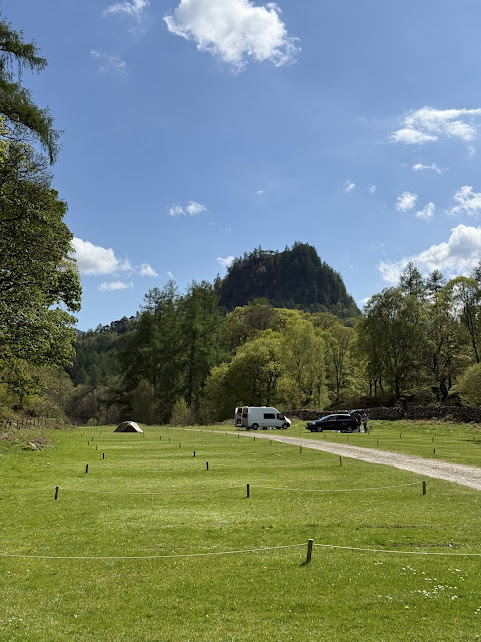

Castle Crag was given to the National Trust as a war memorial after the First World War by the family of 2nd Lieutenant John Hamer. Hamer was killed in action in March 1918, and the memorial is dedicated to him and ‘the men of Borrowdale’ whose names are listed on the stone tablet.
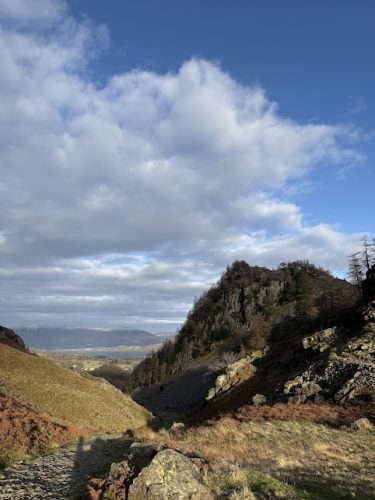
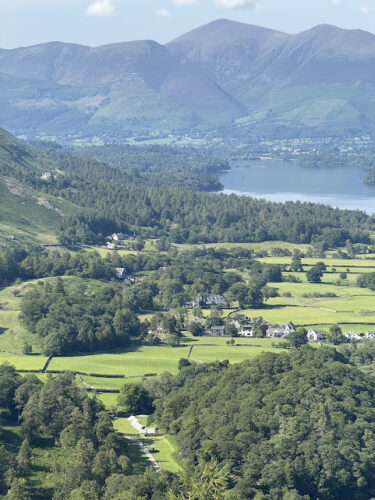
Castle Crag is 290m above sea level, making it the smallest Wainwright. Alfred Wainwright included Castle Crag in his guide books due to the Crag being ‘so magnificently independent, so ruggedly individual, so aggressively unashamed of its lack of inches’. You will surely agree with him as you take in the beautiful views around you. Castle Crag has historically been extensively quarried, with the famed Millican Dalton making High Hows Quarry below the peak of Castle Crag his summer home from the 1920’s for over 20 years.
Nowadays, Castle Crag is included within the tenancy of Hollows Farm. The land is protected and managed in a sensitive way, recently gaining National Nature Reserve status for its ancient temperate rainforest.
Currently, Castle Crag is in a livestock exclusion, meaning Hollows Farm does not use the woodland area for grazing pasture for any sheep or cows. This is being reviewed by Natural England and the National Trust in July 2025, with the hope to use a limited number of native breed cattle at certain times of year to conservatively graze the woodland, helping with the regeneration of new saplings and poaching the ground for soil aeration.
Castle Crag was a slate quarry in the 19th century, with fell ponies and hand pulled sleds being used to move quarried stone down from the Crag. There is also evidence that Castle Crag, formerly known as Castle Hill, was an Iron Age hill fort; with people living here foraging on wild berries and hunting for food.




 Back to blog