


One of the main reasons the Lake District National Park looks as it does today is due to the hundreds of years of traditional hill farming that has taken place amongst the Lakeland fells. From dry stone walls to Herdwick sheep, stone barns and carefully grazed fellsides; every iconic view in the Lake District has been influenced by hill farming one way or another. Hill farms use land from the valley floor up to the tops of the fells. Starting with walled and fenced fields in the valley bottoms; through larger fenced and walled intakes on the fellside and out onto open fell land. Lake District open fell makes up for a lot of the Common Land in Great Britain.
Hefted sheep stick to one area of the land and don’t stray far from it, they pass down their knowledge of home to their lambs and the hefted herd therefore continues. This is an essential part of hill farming as the flock needs to stay together and on the area of common land that the farmer has rights to use. Hollows Farm has rights to use Derwent common, which is in an environmental scheme to reduce sheep numbers on the fell side, hopefully improving the condition of local flora and fauna and increasing habitat for local wildlife. EU prescriptions encouraged over grazing of the fellside, and hill farmers are now working with lower stocking densities to repair any damage caused. Selective sheep grazing can actually improve the health of soil and plant species in upland areas – at Hollows Farm our hefted flock consists of native sheep breeds such as Herdwicks and Cheviots.

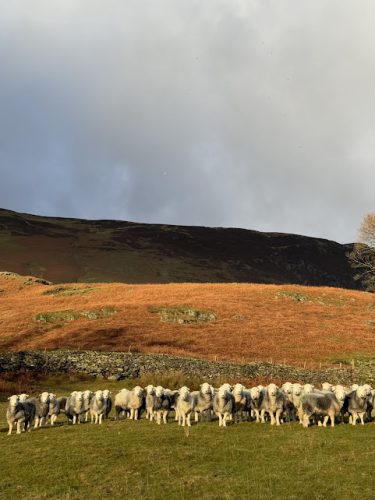
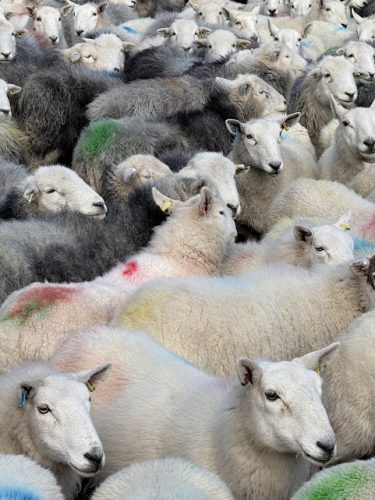
At Hollows Farm, the main native breeds of sheep that make up our flock are Herdwick and Cheviot.
Herdwick sheep originate from the Lake District, they are amazingly well adapted to the rugged and challenging landscape. They can survive in times of drought, stormy weather and even snow up on the mountain tops. For hundreds of years, generations of Herdwick sheep have grazed the Lakeland fells and they are a massive part of the Lake Districts history and heritage, as well as common land and field management. Maintaining a flock of Herdwick sheep becomes ever more challenging as the years go by for traditional hill shepherds, with fleece value being extremely low (In 2025, it costs around £1.20 per sheep to have them sheared, however the British Wool board pay less than £1 per fleece, meaning our wool runs at a loss). Alongside this, the current UK government is not supporting locally farmed meat, meaning our market price is around £70 per lamb due to imported meats being prioritised into supermarkets. Years of care and careful management go into each individual member of our flock. It is so disheartening when your healthy and sustainable lamb is low value. How can you help? Buy local! Support British farmers by buying directly and being conscious of the food choices you make.
 Back to blog